Villager: Olive
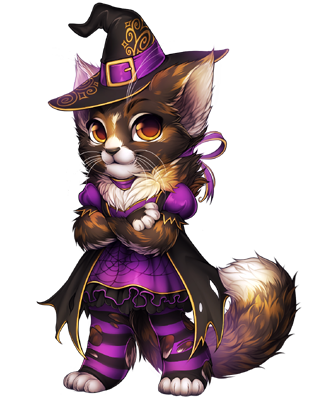
Villager Info
ID: #263592
Name: Olive
Gender: Female
Location: Dragonsmaw Manor
Born 8 years, 7 months ago
Career: Explorer
Owner: PastryLovinAlex
Species: Cat
Color: Witch
Buffs:House: Dragonsmaw Manor House (1/50)
Career (View All)

About
Witchcraft or witchery broadly means the practice of and belief in magical skills and abilities exercised by solitary practioners and groups known as covens. Witchcraft involves the use of intent (and often physical objects) to manipulate environmental energy in order to effect change in favor of the practitioners.
Throughout the early modern period, the English term "witch" was not exclusively negative in meaning, and could also indicate cunning folk. There were a number of interchangeable terms for these practitioners, 'white', 'good', or 'unbinding' witches, blessers, wizards, sorcerers, however 'cunning-man' and 'wise-man' were the most frequent. Some of the healers and diviners historically accused of witchcraft have considered themselves mediators between the mundane and spiritual worlds, roughly equivalent to shamans. Such people described their contacts with fairies, spirits often involving out-of-body experiences and travelling through the realms of an "other-world".
In Japanese folklore, the most common types of witch can be separated into two categories: those who employ snakes as familiars, and those who employ foxes.
Witchcraft in Europe between 500-1750 was believed to be a combination of sorcery and heresy. While sorcery attempts to produce negative supernatural effects through formulas and rituals, heresy is the Christian contribution to witchcraft in which an individual makes a pact with the Devil.
Pagan practices formed a part of Russian and Eastern Slavic culture; the Russian people were deeply superstitious. The witchcraft practiced consisted mostly of earth magic and herbology; it was not so significant which herbs were used in practices, but how these herbs were gathered. Ritual centered on harvest of the crops and the location of the sun was very important. While these customs were unique to Russian culture, they were not exclusive to this region. Russian pagan practices were often akin to paganism in other parts of the world. The Chinese concept of chi, a form of energy that often manipulated in witchcraft, is known as bioplasma in Russian practices. The western concept of an "evil eye" or a "hex" was translated to Russia as a "spoiler".
In Southern African traditions, there are three classifications of somebody who uses magic. The tagati is usually improperly translated into English as "witch", and is a spiteful person who operates in secret to harm others. The sangoma is a diviner, somewhere on a par with a fortune teller, and is employed in detecting illness, predicting a person's future (or advising them on which path to take), or identifying the guilty party in a crime. She also practices some degree of medicine. The inyanga is often translated as "witch doctor" (though many Southern Africans resent this implication, as it perpetuates the mistaken belief that a "witch doctor" is in some sense a practitioner of malicious magic). The inyanga's job is to heal illness and injury and provide customers with magical items for everyday use. Of these three categories the tagati is almost exclusively female, the sangoma is usually female, and the inyanga is almost exclusively male.
Throughout the early modern period, the English term "witch" was not exclusively negative in meaning, and could also indicate cunning folk. There were a number of interchangeable terms for these practitioners, 'white', 'good', or 'unbinding' witches, blessers, wizards, sorcerers, however 'cunning-man' and 'wise-man' were the most frequent. Some of the healers and diviners historically accused of witchcraft have considered themselves mediators between the mundane and spiritual worlds, roughly equivalent to shamans. Such people described their contacts with fairies, spirits often involving out-of-body experiences and travelling through the realms of an "other-world".
In Japanese folklore, the most common types of witch can be separated into two categories: those who employ snakes as familiars, and those who employ foxes.
Witchcraft in Europe between 500-1750 was believed to be a combination of sorcery and heresy. While sorcery attempts to produce negative supernatural effects through formulas and rituals, heresy is the Christian contribution to witchcraft in which an individual makes a pact with the Devil.
Pagan practices formed a part of Russian and Eastern Slavic culture; the Russian people were deeply superstitious. The witchcraft practiced consisted mostly of earth magic and herbology; it was not so significant which herbs were used in practices, but how these herbs were gathered. Ritual centered on harvest of the crops and the location of the sun was very important. While these customs were unique to Russian culture, they were not exclusive to this region. Russian pagan practices were often akin to paganism in other parts of the world. The Chinese concept of chi, a form of energy that often manipulated in witchcraft, is known as bioplasma in Russian practices. The western concept of an "evil eye" or a "hex" was translated to Russia as a "spoiler".
In Southern African traditions, there are three classifications of somebody who uses magic. The tagati is usually improperly translated into English as "witch", and is a spiteful person who operates in secret to harm others. The sangoma is a diviner, somewhere on a par with a fortune teller, and is employed in detecting illness, predicting a person's future (or advising them on which path to take), or identifying the guilty party in a crime. She also practices some degree of medicine. The inyanga is often translated as "witch doctor" (though many Southern Africans resent this implication, as it perpetuates the mistaken belief that a "witch doctor" is in some sense a practitioner of malicious magic). The inyanga's job is to heal illness and injury and provide customers with magical items for everyday use. Of these three categories the tagati is almost exclusively female, the sangoma is usually female, and the inyanga is almost exclusively male.

